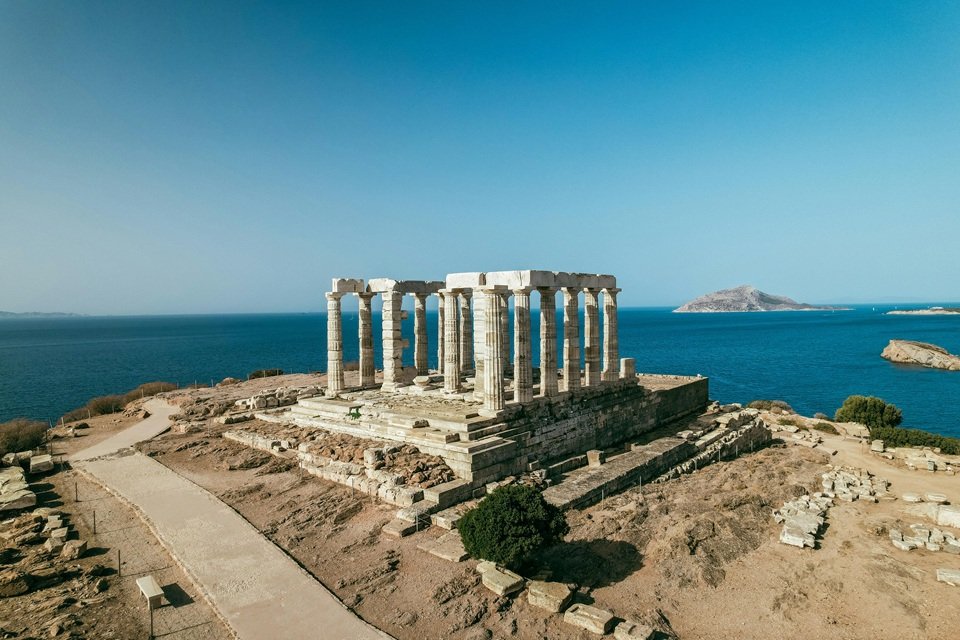
There’s something magical about Cape Sounion. Perched on the southern tip of the Attica peninsula, this spot feels like the edge of the world. The deep blue Aegean stretches endlessly in every direction, cliffs drop dramatically into the sea, and high above, the ancient marble columns of the Temple of Poseidon glow golden in the sun.
It’s one of those places that makes you stop, breathe, and just take it all in. If you’re visiting Athens, Cape Sounion is the perfect escape from the city — a mix of myth, history, and stunning coastal beauty that captures the spirit of Greece itself.
Where Is Cape Sounion?
Cape Sounion sits about 70 kilometers (around 43 miles) southeast of Athens, at the very end of the Attica peninsula. It’s an easy trip that can be done as a half-day or full-day excursion. Most visitors travel by car, but buses and guided tours are also available from the city center. The drive itself is part of the experience — the coastal road, called Poseidonos Avenue, is one of the most scenic routes in Greece.
As you drive along, you’ll pass charming seaside towns, rocky cliffs, and hidden beaches with turquoise waters. On your right, the sea sparkles in the sunlight, while on your left, pine-covered hills roll down toward the shore. It’s one of those drives that makes you want to pull over every few minutes for a photo. The road winds its way all the way down to the tip of the peninsula, where the temple stands proudly on a high promontory. Whether you rent a car or join a tour, the journey to Sounion is as rewarding as the destination itself.
A Glimpse into History
Cape Sounion has been a place of worship for thousands of years. In ancient Greece, it was one of the most important sanctuaries dedicated to Poseidon, the god of the sea. The temple that we see today was built around 444 BC, during the Golden Age of Athens — the same era that produced the Parthenon. Both temples reflect the glory and power of ancient Athens, when art, architecture, and democracy were flourishing.
The location of the temple was not chosen by chance. Sailors returning home from long voyages would first see Cape Sounion from the sea. The temple served as both a spiritual beacon and a landmark guiding them safely toward the port of Piraeus. Ancient mariners often stopped here to make offerings to Poseidon, asking for calm seas and protection during their journeys. Sounion was also mentioned in Homer’s Odyssey. According to legend, King Menelaus stopped here on his way back from Troy to bury his helmsman, who died during the voyage. That’s how far back the site’s significance goes — it’s woven into the earliest Greek myths and epics.
The Myth of Aegeus and the Birth of the Aegean Sea
One of the most famous legends connected to Cape Sounion is the story of King Aegeus, the father of Theseus. According to myth, Aegeus waited at Cape Sounion for his son to return from Crete, where Theseus had gone to kill the Minotaur. Before Theseus left, they agreed on a signal — if he succeeded, he would sail home with white sails; if he failed, his ship would carry black ones.
Tragically, Theseus forgot to change the sails after his victory. When Aegeus saw the black sails on the horizon, he believed his son was dead. Overcome with grief, he threw himself from the cliffs of Sounion into the sea below. The sea was later named after him — the Aegean Sea. Standing at the edge of the cliffs today, with the waves crashing far below, it’s easy to imagine the drama of that ancient tale. Myth and landscape blend perfectly here, making Sounion one of those rare places where stories truly come alive.
Exploring the Temple of Poseidon
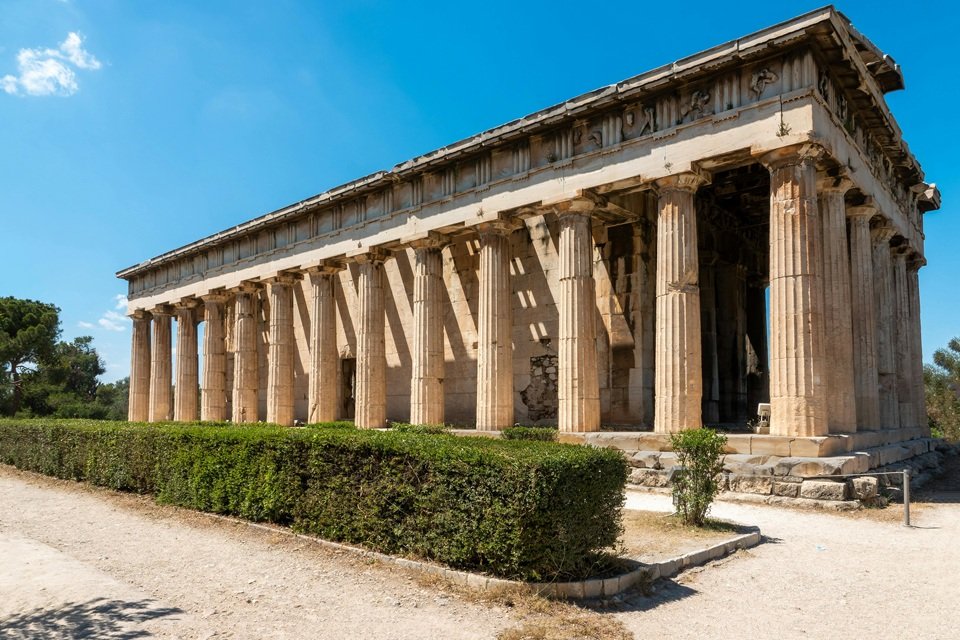
The Temple of Poseidon that crowns Cape Sounion is one of the best-preserved ancient temples in Greece. It was built in the Doric style, the same architectural order as the Parthenon. Out of the original 34 columns, 15 still stand proudly against the sky. Each column is over six meters tall and carved from white marble sourced from nearby quarries in Agrileza. As you walk through the ruins, you can still sense the grandeur that once was. The simplicity of the Doric design gives the temple a timeless strength. In the late afternoon light, the marble glows with warm golden tones, and the sea beyond turns deep blue — a color contrast that has inspired countless artists, writers, and photographers.
Lord Byron, the famous British poet, visited Cape Sounion in the early 19th century during his travels through Greece. He was so moved by the beauty of the place that he carved his name into one of the temple’s columns (you can still spot it today if you look closely). Byron later wrote about Sounion in his poem Don Juan, describing it as “a temple of the god of the sea, standing alone on a cliff that overhangs the deep.”
The View from the Edge
The panoramic view from Cape Sounion is simply breathtaking. On a clear day, you can see across the Aegean to several islands, including Kea, Kythnos, and even parts of the Cyclades. The temple sits at about 60 meters above the sea, offering an unobstructed view of the horizon. The constant wind, the cry of the seagulls, and the rhythmic sound of the waves below create an atmosphere that feels almost sacred. Most visitors come in the late afternoon to watch the sunset, and for good reason. As the sun dips lower, the light turns soft and golden, bathing the temple in warm hues. Then, slowly, the sun melts into the sea, painting the sky with shades of pink, orange, and purple. It’s one of the most romantic and unforgettable sunsets in all of Greece. If you’re traveling with someone special, it’s the perfect spot to share a quiet moment.
Things to Do Around Cape Sounion
While the Temple of Poseidon is the main attraction, the area around Cape Sounion offers plenty to explore. There are several beautiful beaches nearby, ideal for swimming and sunbathing before or after your visit to the temple. Sounion Beach, located just below the temple hill, is a lovely sandy spot with clear, calm water. You can rent a sunbed, enjoy a swim, and grab a snack or a drink at one of the nearby tavernas.
A short drive away, you’ll find Legrena Beach, which is more peaceful and less crowded. It’s perfect if you prefer a quieter atmosphere. For those who love snorkeling or diving, the crystal-clear waters around the cape are full of marine life and underwater rock formations. You can also visit the nearby Temple of Athena Sounias, located about one kilometer from Poseidon’s temple. Though smaller and less preserved, it was once an important sanctuary dedicated to Athena, protector of sailors. From there, you get another stunning view of the sea and the temple in the distance.
The Best Time to Visit
Cape Sounion is beautiful all year round, but the best time to visit is from April to October. The weather is warm, the skies are clear, and the sea is perfect for swimming. During the summer months, it can get quite hot during midday, so it’s best to come in the early morning or late afternoon. Sunset is the most popular time, so expect more visitors then — especially in July and August. If you prefer fewer crowds, consider visiting in spring or early autumn. The light is softer, the air is cooler, and you’ll have more space to explore and enjoy the tranquility of the site.
How to Get There
Getting to Cape Sounion from Athens is easy. If you’re driving, just follow the coastal road south through Glyfada, Vouliagmeni, and Lagonisi. The drive takes about 90 minutes, depending on traffic. You can rent a car or hire a private driver if you prefer comfort and flexibility. There are also public buses operated by KTEL that run from Athens to Sounion several times a day. They depart from the Mavromateon terminal near Victoria Square and take around two hours. If you don’t want to worry about logistics, several companies offer guided half-day or sunset tours, which usually include hotel pickup and a professional guide who shares the history and legends of the site.
Local Food and Taverns
After exploring the temple, nothing beats sitting down at a seaside taverna for a meal. Fresh fish, grilled octopus, Greek salad, and chilled white wine taste even better with that sea view. There are several good tavernas near the beach below the temple, as well as in nearby villages like Legrena and Lavrio. A popular spot is Taverna Syrtaki, located right by the water. Their grilled calamari and seafood pasta are local favorites. Another great choice is Panorama Restaurant, which lives up to its name with incredible views and traditional Greek dishes served with warm hospitality. Dining here as the sun sets is the perfect way to end your day at Sounion.
A Place of Peace and Inspiration
Cape Sounion isn’t just another tourist stop — it’s a place that leaves a deep impression. There’s something timeless about standing among those ancient columns, feeling the wind on your face, and gazing out over the sea. It’s easy to understand why the ancient Greeks chose this spot to honor Poseidon. The elements — earth, sea, and sky — all come together here in perfect harmony. Many visitors describe Sounion as a place of peace and reflection. Whether you’re interested in history, mythology, photography, or simply love beautiful views, you’ll find something to connect with. It’s also an incredible spot for stargazing once the sun has set and the crowds have gone. The combination of ancient ruins and a star-filled sky is pure magic.
Final Thoughts
If you’re staying in Athens for more than a couple of days, make time for a trip to Cape Sounion and the Temple of Poseidon. It’s close enough for a half-day visit, yet far enough to feel like a true getaway. You’ll experience breathtaking views, fascinating myths, and the serene beauty of one of Greece’s most iconic landmarks. Whether you come for the history, the legends, or the unforgettable sunset, Cape Sounion will reward you with memories that last a lifetime. Standing on that cliff, watching the sea stretch endlessly into the horizon, you’ll understand why this place has inspired poets, travelers, and dreamers for thousands of years.