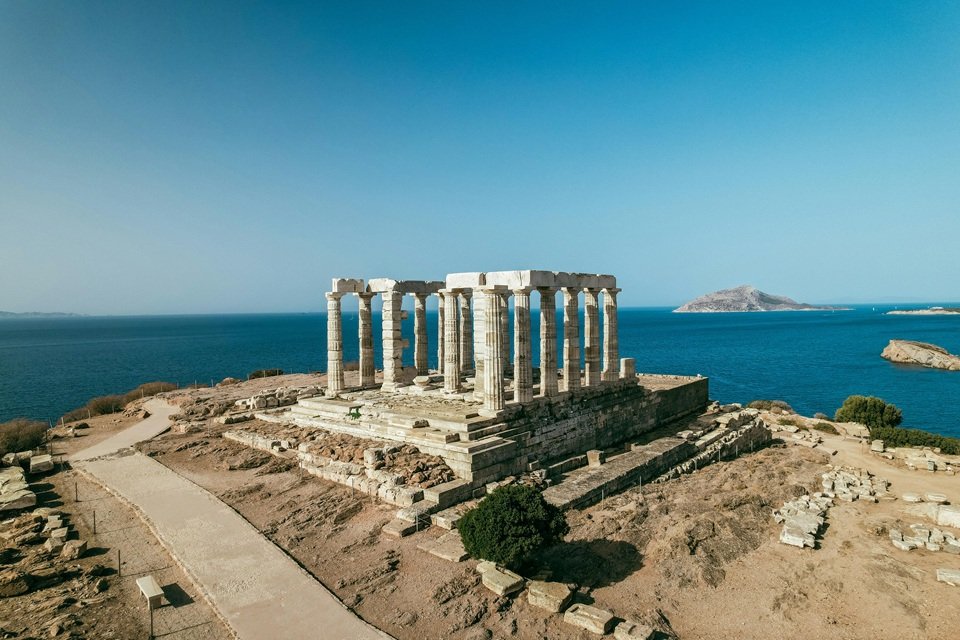
The Ancient Agora of Athens is one of the most impressive archaeological sites in the city and is an essential key to understanding Greek culture.
Official tickets Ancient Agora
Where the Acropolis symbolizes religion and power, the Agora was the center of daily life. Here, citizens met. Political decisions were made. Trade took place, stories were shared, and the democracy that would influence the Western world grew. A visit to this place offers a unique glimpse into life nearly 2,500 years ago, in an environment that is quieter, greener, and more contemplative than many other major attractions in Athens.
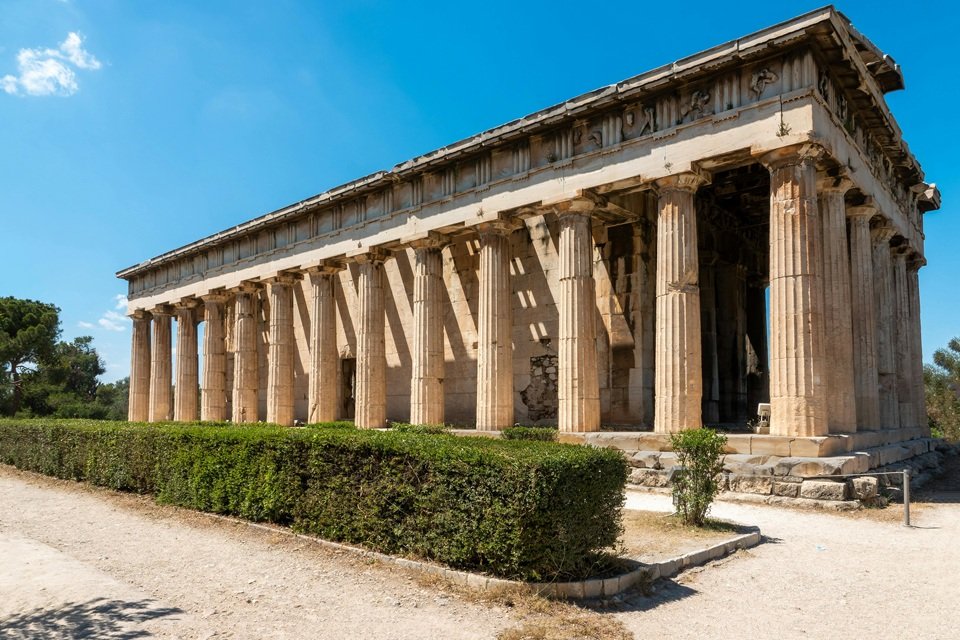
The Ancient Agora covers a vast area at the foot of the Acropolis. As you walk through the landscape, you see paths once walked by philosophers and statesmen, remnants of market halls, votive sites, and the iconic Temple of Hephaestus. You walk in a kind of open-air museum where history literally lies beneath your feet. It is this combination of tangible ruins, nature, and historical significance that makes the Agora an absolute must-see.
Why you absolutely must visit the Ancient Agora
One of the main reasons to visit the Ancient Agora is the impressive state of preservation of several structures. The Temple of Hephaestus is perhaps the best example of classical Doric architecture that you can see throughout Greece. While other temples, such as the Parthenon, primarily stand as ruins, the Hephaestus temple still retains almost all of its columns, its roof shape, and even parts of the metopes. This allows you to effortlessly imagine what temples looked like in the 5th century BC.
In addition, the Agora is known as the birthplace of democracy. Here, citizens held public debates, voted on legislation, and listened to inspiring rhetoricians. A visit to this place is therefore more than historical sightseeing; it feels like a return to a core moment in human history. You walk past the places where Socrates is said to have stood and where magistrates gathered to make decisions about war, trade, and civil rights.
The Stoa of Attalos was completely rebuilt in the 1950s based on archaeological data. It provides a beautiful picture of what market halls and public buildings looked like in antiquity. Inside the stoa is a small but fascinating museum. You can find everyday objects such as pots, toys, coins, jewelry, and statues. Especially the objects directly related to the democratic system — think of voting tokens and official seals — are fascinating to see.
Finally, the location itself is a great advantage. The Ancient Agora is situated in a green park-like area with cypress trees, olive trees, and wildflowers. It is a peaceful escape from the sometimes busy streets of modern Athens, making it a lovely place to stroll at your leisure.
Official tickets Ancient Agora
Visitor tips for the Ancient Agora
A few practical tips can make your visit to the Agora even better. First of all, it is wise to arrive early in the day. Not only is it quieter then, but you also avoid the heat during the summer months. The site is large and mostly unshaded, so wear comfortable shoes and bring water.
A combo ticket can be a smart choice. This gives you access to multiple archaeological sites in Athens, including the Acropolis, the Roman Agora, and the Temple of Zeus. For travelers who want to see a lot, this saves both time and money.
Although the site has a lot to offer, the museum in the Stoa of Attalos is sometimes skipped by visitors. These visitors mainly want to see the temple. That is a shame. The museum provides context for the ruins and helps you understand much better what once happened here. So be sure to take the time for a visit.
For photography enthusiasts, late afternoon is an ideal time. The sunlight illuminates the stones and columns in a way that gives the whole a nearly golden hue. Especially the Temple of Hephaestus looks stunning then.
Finally, it is nice to sit on one of the benches on the hill towards the temple. From here, you have a beautiful view over the entire Agora and can easily imagine what it once looked like, full of market vendors, philosophers, and citizens going about their daily activities.
Official tickets Ancient Agora
What else is there to see near the Ancient Agora?
The location of the Ancient Agora is perfect for those who want to combine multiple attractions in one day. Within minutes, you can reach some of the most important attractions in Athens.
Nearby is the Roman Agora, a smaller but very interesting archaeological site that became the commercial center during the Roman period. Here you will find, among other things, the Tower of the Winds, a remarkable octagonal building that served as a kind of multifunctional clock.
If you head east, you will arrive in Plaka, one of the coziest neighborhoods in Athens. This neighborhood is known for its old streets, colorful buildings, tavernas, and small boutiques. It is a perfect place for a lunch break or a coffee stop between your visits.
The Library of Hadrian is also within walking distance and is one of the most impressive Roman buildings in the city. The enormous complex served as a library, archive, and cultural center.
And of course, the Acropolis (UNESCO site) is never far away. From the Agora, you can already see the majestic rock rising above the city. Those with a combo ticket can easily walk to the entrance of the Acropolis, which is about a ten to fifteen-minute walk away. This makes the Agora a logical starting point for a full day of culture and history.
The Monastiraki Square, a lively hotspot with street vendors, shops, and views of the Agora, is also right next to the site. It is a perfect place to eat, have a drink, or simply enjoy the atmosphere of modern Athens.
Official tickets Ancient Agora
Ancient Agora
When you visit the Ancient Agora, you experience Athens in a way that goes deeper than just admiring monuments. You stand in the place where democracy was born, where philosophers walked, and where the city shaped itself into the intellectual center of the classical world. It is a place full of meaning, beauty, and history — and an absolute recommendation for anyone visiting Athens.