Athens is a city where history and modern life exist side by side. Ancient ruins stand beside cafes, markets, and busy streets. For visitors interested in ancient Greece, two museums are essential: the Acropolis Museum and the National Archaeological Museum. Both are world-renowned, yet they are very different in focus, design, and atmosphere.
Official Tickets
The Acropolis Museum and the National Archaeological Museum: What Makes Them Different
Understanding these differences helps travelers plan their time wisely. Each museum tells a unique story about Greek art and civilization. Together, they provide a complete picture of Greece’s past and its cultural achievements.
Location and Setting
The first difference lies in location. The Acropolis Museum stands directly beneath the Acropolis hill. Its modern glass structure blends with the ancient landscape. From its upper floors, the Parthenon is clearly visible through large windows. The museum feels connected to the sacred rock above it.
The National Archaeological Museum is located in a different part of Athens, near Omonia Square. It is about 2.5 kilometers from the Acropolis. The building is neoclassical and grand, with columns and marble staircases. It feels like a traditional European museum from the nineteenth century. Its setting reflects the scholarly spirit of archaeology and research.
Both museums are easy to reach. The Acropolis Museum is accessible via Acropoli Metro Station, while the National Archaeological Museum is closest to Omonia or Victoria Station. The Acropolis Museum suits visitors exploring the historic center and the National Archaeological Museum fits perfectly into a full day dedicated to ancient art and culture.
Official Tickets
Different Historical Focus
The Acropolis Museum focuses on a single archaeological site — the Acropolis and its surrounding slopes. Every object displayed inside was discovered there. The exhibits tell the story of classical Athens, from early sanctuaries to the height of the fifth century BC. Its narrative revolves around the Parthenon, the Erechtheion, and other monuments on the hill.
The National Archaeological Museum covers all of Greece. Its collection includes artifacts from Mycenae, Delphi, Olympia, Santorini, and many other locations. The timeline stretches from prehistoric cultures to the Roman era. Visitors can follow the entire development of Greek civilization over thousands of years.
In short, the Acropolis Museum is specialized, while the National Archaeological Museum is comprehensive. One focuses on the art and meaning of a single sacred site. The other offers a broad panorama of Greece’s artistic and cultural evolution.
Highlights of the Acropolis Museum
The Acropolis Museum is modern, spacious, and filled with natural light. Its design reflects transparency and connection with the ancient world. The layout follows a clear path through time, beginning with discoveries from the slopes of the Acropolis.
At the ground floor small objects from daily life in ancient Athens are presented — pottery, offerings, and tools. The next levels display sculptures from temples that once stood on the Acropolis.
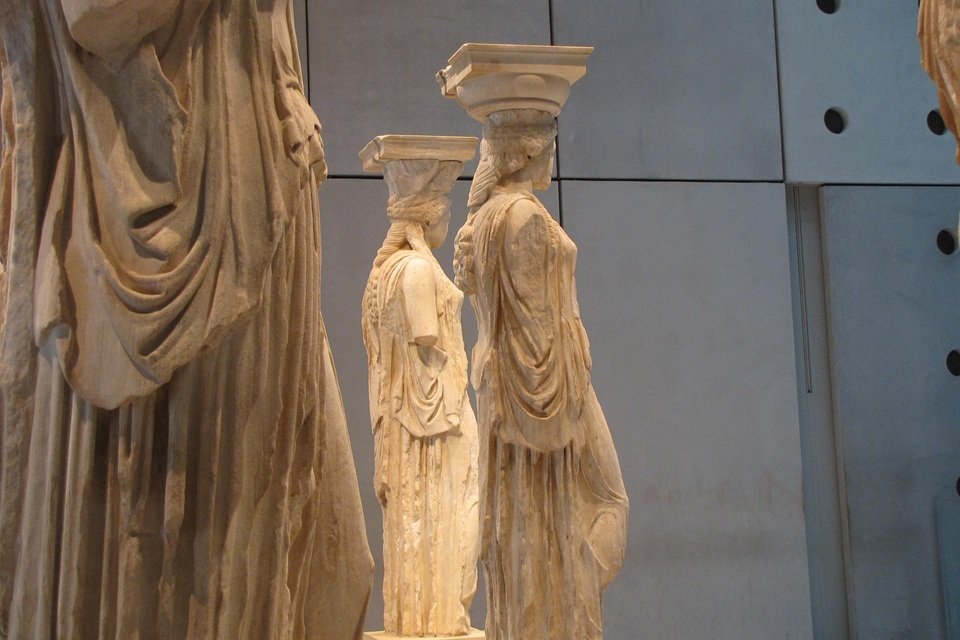
One of the most impressive areas is the Caryatids Hall. Here, the elegant maidens from the Erechtheion temple stand in a circle, supporting stone entablatures on their heads. Their fine detail and lifelike presence are unforgettable. A single Caryatid is missing; it remains in the British Museum. The empty space emphasizes ongoing discussions about cultural heritage and repatriation.
The top floor, known as the Parthenon Gallery, is arranged in the same order as the temple’s original friezes. Visitors can walk around and imagine the sculptures in their ancient context. The natural light enters from the same direction as on the real Parthenon outside, creating a powerful visual link between the museum and the monument.
Another unique feature is the glass floor above ancient ruins. Beneath the museum lies an excavated neighborhood of ancient Athens. The remains of houses, workshops, and streets are visible through the glass panels. This feature connects modern visitors to the everyday life of ancient Athenians.
The Acropolis Museum is not very large. Most visitors spend one to two hours there. Its focused approach makes it easy to understand and enjoy. Every exhibit relates directly to the Acropolis and its temples, making it an ideal complement to a visit to the archaeological site itself.
Official Tickets
Highlights of the National Archaeological Museum
The National Archaeological Museum is the largest museum in Greece. It holds one of the richest collections of ancient art in the world. The exhibitions span several floors and cover all historical periods.
Your journey begins with the Prehistoric Collection, which includes finds from Mycenae, Troy, and the Cycladic islands. The most famous object is the Mask of Agamemnon, a golden funeral mask discovered by Heinrich Schliemann. Whether or not it belonged to the mythical king, it remains one of Greece’s most iconic treasures.
Further galleries display magnificent bronze statues recovered from the sea. The Artemision Zeus or Poseidon stands in a dramatic pose, ready to throw his weapon. Nearby, the Boy Jockey of Artemision captures movement and emotion in bronze like few other sculptures from antiquity.
The museum also contains vast rooms of vases, jewelry, frescoes, and tools from across Greece. The Cycladic collection showcases minimalist marble figurines, while the Egyptian collection reflects ancient trade and influence. Every gallery highlights a different aspect of the Mediterranean world.
Visitors usually spend two or three hours exploring. The museum’s layout encourages slow discovery. Unlike the Acropolis Museum, it requires more time and attention, but the reward is greater variety and historical depth.
Atmosphere and Design
The two museums offer contrasting experiences. The Acropolis Museum feels modern, airy, and bright. Its architecture emphasizes light and connection with the Acropolis hill. Large windows replace heavy walls, and glass floors invite visitors to look both above and below. The atmosphere is peaceful and minimalistic, designed for reflection and admiration.
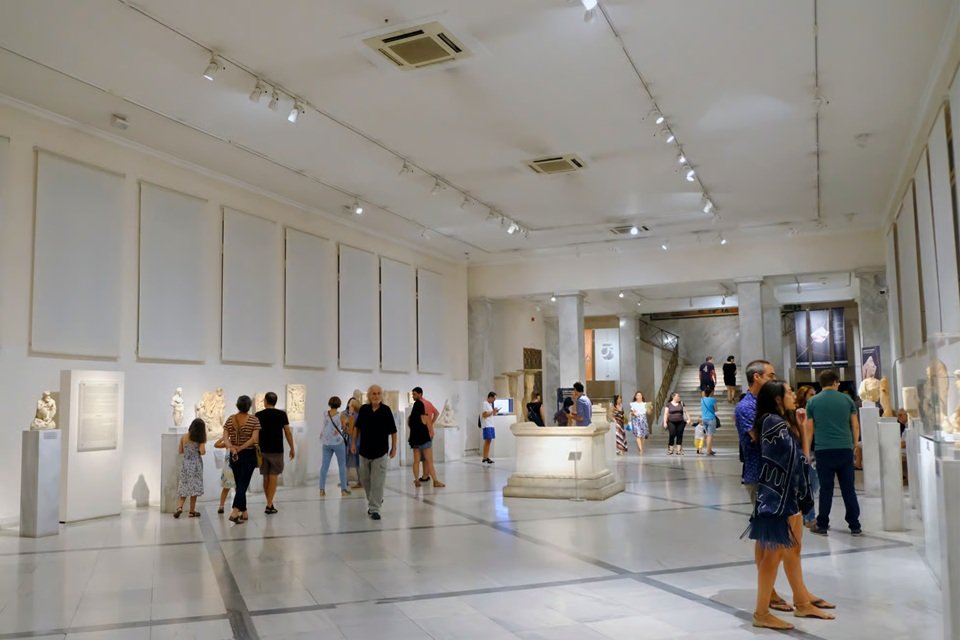
The National Archaeological Museum feels more traditional and monumental. High ceilings, marble floors, and long corridors create an academic atmosphere. Visitors walk through grand halls filled with sculptures, reliefs, and ancient objects. The feeling is more like entering a timeless archive of human history.
Both museums are exceptionally well-maintained. Information panels are bilingual, written in Greek and English. The staff is professional, and the facilities are clean and accessible.
Each museum also features a café and a shop. The Acropolis Museum café offers one of the best views in Athens, directly facing the Parthenon. It is a favorite spot for visitors to relax after their tour. The National Archaeological Museum café sits in a quiet courtyard with greenery, offering a calm break between exhibitions.
Official Tickets
Tickets and Visiting Information
The two museums require separate tickets.
Acropolis Museum:
€20 (April–October)
€10 (November–March)
National Archaeological Museum:
€15 (April–October)
€7 (November–March)
Tickets can be purchased online or at the entrance. It is recommended to buy tickets online to avoid long queues.
Photography is generally allowed, except in a few restricted areas. Flash is not permitted. Large bags must be checked at the cloakroom before entering.
Official Tickets
How Much Time to Spend
Time requirements differ for each museum.
The Acropolis Museum takes about one to two hours for most visitors. It is ideal to combine with a walk up the Acropolis hill. The museum visit either before or after climbing the site creates a deeper understanding of what was once there.
The National Archaeological Museum deserves more time. Plan at least two to three hours to see the highlights comfortably. Serious history enthusiasts often spend half a day exploring its many rooms and collections.
Both museums offer guided tours and audio guides. These can help explain details that might otherwise be overlooked.
Educational Value and Appeal
The Acropolis Museum appeals to visitors interested in architecture, religion, and classical Athens. It tells the story of one city during its golden age. Its focus makes it easy to follow, even for those new to Greek history.
The National Archaeological Museum attracts those who want a complete overview of ancient Greece. It covers art, daily life, warfare, and religion across different time periods and regions. Its variety suits both casual tourists and scholars.
Families may find the Acropolis Museum easier for children, thanks to its size and interactive design. The National Archaeological Museum, though larger, offers more spectacular objects and a deeper sense of time.
Official Tickets
Accessibility and Visitor Comfort
Both museums are wheelchair-accessible and provide elevators. Air conditioning keeps the interiors cool even during Athens’ hot summer days. Rest areas, gift shops, and cafés are available in both buildings.
The Acropolis Museum’s modern design includes clear signage and large open spaces. The National Archaeological Museum’s older structure has more stairs and corridors, but staff are always ready to assist visitors with mobility needs.
Complementary Experiences
The two museums complement each other perfectly. Visiting both gives a balanced view of Greek civilization. The Acropolis Museum focuses on the artistic perfection of classical Athens. The National Archaeological Museum expands the story to include the centuries that led to and followed that era.
After visiting the Acropolis Museum, walking up to the Acropolis itself becomes a richer experience. The statues, friezes, and architecture come to life when seen in their original context. After exploring the National Archaeological Museum, visitors understand how Greek art developed from simple figurines to monumental sculpture.
Official Tickets
Conclusion
The Acropolis Museum and the National Archaeological Museum are not competitors. They are two sides of the same cultural coin. The first is intimate, elegant, and directly tied to one of the world’s greatest monuments. The second is vast, scholarly, and tells the full story of Greece’s ancient past.
For visitors with limited time, the Acropolis Museum offers a concise and visually stunning introduction to classical Athens. For those with a deeper interest in archaeology and art, the National Archaeological Museum provides a broader historical journey.
Together, they show the richness and diversity of Greek civilization. Visiting both is the best way to understand why Athens remains a center of culture, learning, and inspiration after more than 2,500 years.